
SEO Strategy for Real Estate Businesses: Complete Growth Plan to Rank Higher and Generate Buyer and Seller Leads
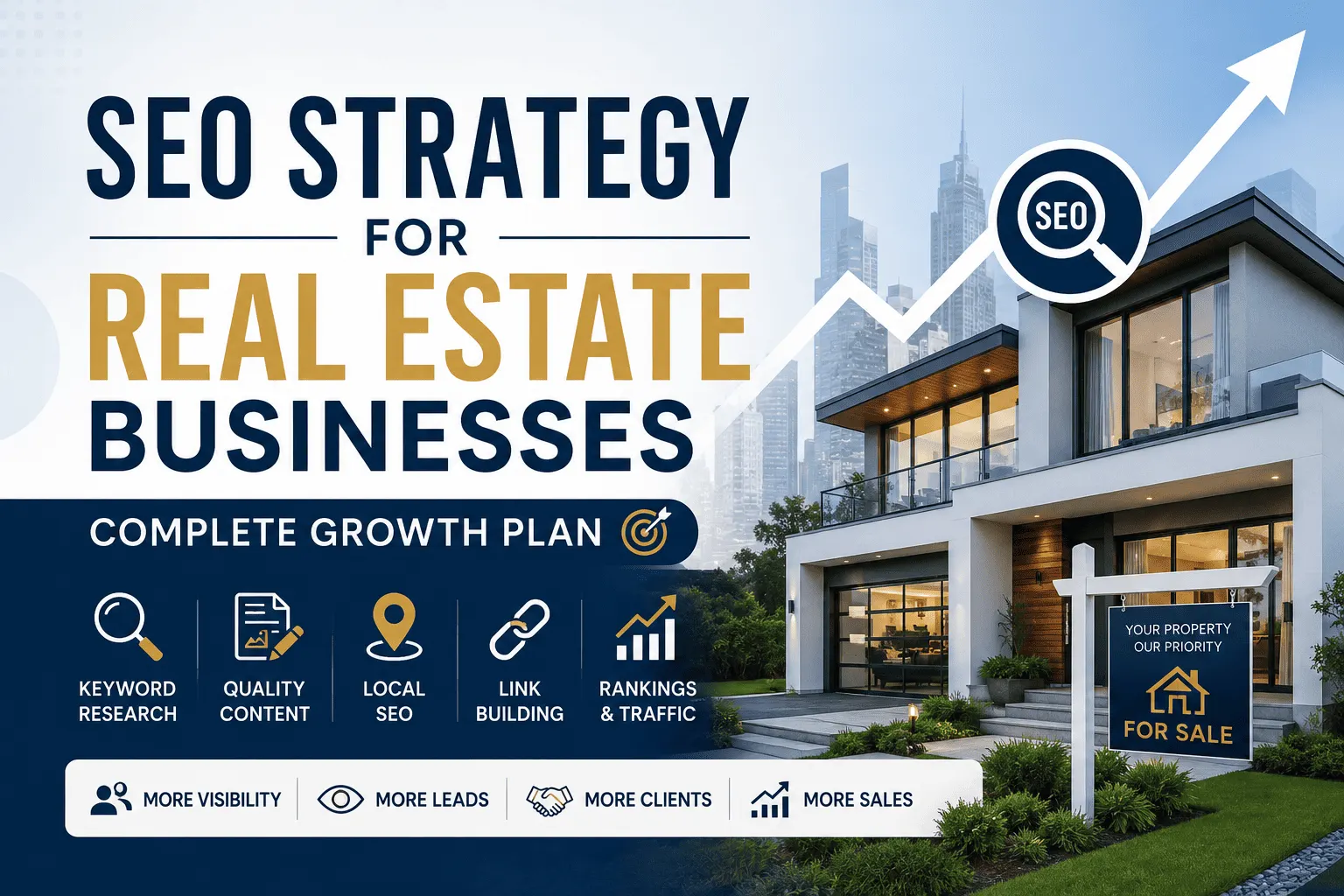
This is why a strong SEO strategy for real estate businesses is so important. Whether you are a real estate agency, realtor, brokerage, property consultant, builder, developer, property management company, or rental business, your customers are already searching on Google. The only question is whether they are finding your business or your competitors.
Real estate is one of the most search-driven industries in the market. Buyers search for homes, investors search for profitable locations, sellers search for agents, tenants search for rentals, and property owners search for agencies that can help them get better value. Before people speak to a real estate agent, they usually spend hours researching online.
A proper real estate SEO strategy helps your website appear for searches like “real estate agent near me,” “homes for sale in [city],” “property dealer in [location],” “commercial property for sale,” “best realtor in [area],” “apartments for rent in [city],” and “sell my house fast in [location].” These keywords are valuable because they come from people who already have buying, selling, renting, or investment intent.
For real estate businesses, SEO is not just about ranking pages. It is about creating a complete digital presence that builds trust, shows property expertise, captures local demand, and turns visitors into leads. A strong SEO campaign connects your website, property listings, local pages, blogs, Google Business Profile, reviews, backlinks, and conversion system into one long-term lead generation strategy.
Why SEO Matters for Real Estate Businesses
SEO matters for real estate businesses because property decisions usually start with research. A buyer may not immediately contact an agent. They may first search for the best areas to buy, property prices, new projects, home loan options, local schools, nearby amenities, market trends, and investment potential. A seller may search for property valuation, best real estate agents, brokerage charges, or how to sell a home faster.
If your website appears during these searches, your brand becomes part of the customer’s decision-making journey. This creates trust before the first call.
Real estate SEO helps businesses generate:
- Buyer leads
- Seller leads
- Rental inquiries
- Commercial property leads
- Local area visibility
- Project inquiries
- Property management leads
- Investor inquiries
- Long-term organic traffic
- Better brand authority
Real estate is also highly local. People do not search only for “real estate.” They search for specific cities, neighborhoods, localities, streets, property types, and price ranges. This makes local SEO and location-based content extremely powerful.
Paid ads can bring quick inquiries, but real estate ad costs can become high in competitive markets. SEO takes time, but it builds long-term visibility. Once your website ranks for important local and property-related searches, it can continue bringing organic leads without paying for every click.
Understanding How Real Estate Customers Search Online
Before creating an SEO strategy, you need to understand how real estate customers search. Buyers, sellers, tenants, landlords, investors, and commercial clients all search differently.
A home buyer may search:
- Homes for sale in [city]
- 3 BHK apartment in [location]
- Best areas to buy property in [city]
- New construction homes near me
- Property prices in [area]
- Real estate agent near me
A seller may search:
- Best real estate agent in [city]
- How much is my house worth?
- Sell my property in [location]
- Real estate brokerage charges
- How to sell a house fast
- Property valuation services
A tenant may search:
- Apartments for rent in [city]
- Office space for rent near me
- Furnished flats in [location]
- Commercial property for lease
- Houses for rent near [area]
An investor may search:
- Best places to invest in real estate
- Rental yield in [city]
- Upcoming real estate projects
- Commercial property investment
- Property market trends in [location]
This means a real estate SEO campaign cannot focus on only one keyword. It must cover the complete journey from research to inquiry.
Keyword Research Strategy for Real Estate Businesses
Keyword research for real estate SEO should be based on location, property type, customer intent, transaction type, and service category. The goal is to find keywords that bring real buyers, sellers, renters, landlords, and investors.
Primary Real Estate Keywords
These are broad keywords that describe your core business.
Examples:
- Real estate company in [city]
- Real estate agency near me
- Realtor in [location]
- Property dealer in [city]
- Real estate broker in [area]
- Real estate consultant in [city]
- Best real estate agent near me
These keywords are useful for homepage optimization, main service pages, and local pages. They are usually competitive, but they are important for your SEO foundation.
Buyer Intent Keywords
Buyer keywords are extremely valuable because they come from people looking for property options.
Examples:
- Homes for sale in [city]
- Apartments for sale in [location]
- Villas for sale in [city]
- Condos for sale near me
- 2 BHK flat for sale in [area]
- New homes in [location]
- Luxury homes for sale in [city]
These keywords should be mapped to property listing pages, category pages, location pages, and project pages.
Seller Intent Keywords
Seller keywords help real estate agents and brokerages attract property owners who want to sell.
Examples:
- Sell my house in [city]
- Best realtor to sell my home
- Property valuation in [location]
- Real estate agent for selling property
- How to sell property fast
- Home selling agent near me
- List my property for sale
Seller-focused pages should explain your selling process, valuation support, marketing strategy, negotiation help, listing exposure, and previous success.
Rental Keywords
Rental keywords are important for agencies, property managers, and rental platforms.
Examples:
- Apartments for rent in [city]
- House for rent near me
- Office space for rent in [location]
- Furnished apartment in [area]
- Commercial property for lease
- Retail space for rent
- Property management for landlords
Rental pages should be fast, filter-friendly, mobile-friendly, and easy to inquire from.
Local Real Estate Keywords
Local keywords are the heart of real estate SEO.
Examples:
- Real estate agent in Brooklyn
- Homes for sale in Manhattan
- Property dealer in Jaipur
- Apartments for sale in Toronto
- Best realtor in Dubai Marina
- Commercial property in London
- Flats for sale in South Delhi
Each important location should have a unique page. These pages should not be copied with only the area name changed. They should include local market details, property types, nearby amenities, price trends, lifestyle information, and local FAQs.
Informational Keywords
Informational keywords help attract people earlier in their buying or selling journey.
Examples:
- How to buy a house for the first time
- Best areas to buy property in [city]
- Is now a good time to buy a home?
- How much does a real estate agent charge?
- What documents are needed to sell property?
- How to choose a real estate agent
- Renting vs buying a home
These keywords are ideal for blog posts, guides, and educational content.
Ideal Website Structure for Real Estate SEO
A real estate website needs a clear structure so users and search engines can easily understand services, locations, listings, and content. A basic website with only a homepage and a contact page will not be enough.
A strong real estate website structure may include:
| Page Type | Purpose | SEO Role |
| Homepage | Introduces the brand and core services | Targets main business keywords |
| Buy Property Page | Helps buyers find properties | Targets buyer intent keywords |
| Sell Property Page | Attracts property sellers | Targets seller intent keywords |
| Rent Property Page | Supports rental inquiries | Targets rental keywords |
| Commercial Property Page | Targets business clients | Builds commercial search visibility |
| Location Pages | Targets city and neighborhood searches | Supports local SEO |
| Property Listing Pages | Shows available inventory | Captures property-specific searches |
| Blog Section | Educates buyers and sellers | Builds topical authority |
| Agent Profile Pages | Builds personal trust | Supports conversion |
| Contact Page | Converts visitors into leads | Makes inquiry easy |
Each page should have a specific purpose. The homepage should build trust and direct users to buying, selling, renting, or investment sections. Location pages should target local search demand. Blog pages should answer common customer questions. Listing pages should help users take action.
On-Page SEO Strategy for Real Estate Websites
On-page SEO helps Google understand what each page is about and helps users find relevant information quickly. For real estate businesses, on-page SEO should be clear, local, and conversion-focused.
Important on-page SEO elements include:
- Clear H1 heading
- Proper H2 and H3 structure
- Location-based keywords
- Property type keywords
- SEO-friendly URLs
- Optimized meta titles
- Strong meta descriptions
- Internal links
- Image alt text
- Fast property listing pages
- Schema markup
- Clear CTAs
- FAQs
- Trust sections
- Reviews and testimonials
For example, a page targeting “homes for sale in Miami” should include property listings, area details, average price insights, nearby amenities, FAQs, internal links to related neighborhoods, and a clear inquiry form.
Example Real Estate Location Page Structure
A strong location page can follow this format:
| Section | Purpose |
| Hero Section | Target location and main CTA |
| Area Overview | Explain the locality and lifestyle |
| Property Types | Cover apartments, villas, homes, and commercial spaces |
| Market Insights | Discuss prices, demand, and trends |
| Nearby Amenities | Mention schools, transport, offices, malls, and hospitals |
| Featured Listings | Show available properties |
| Why Work With Us | Build trust |
| FAQs | Answer local buyer and seller questions |
| CTA | Encourage inquiry or consultation |
This format makes the page useful instead of thin. It gives buyers, sellers, and search engines enough information about the location.
Local SEO Strategy for Real Estate Businesses
Local SEO is one of the most important parts of real estate marketing. Most real estate leads are connected to a city, locality, or neighborhood. People want agents who understand the local market.
A strong local Business SEO strategy includes Google Business Profile optimization, location pages, reviews, local citations, map rankings, and local backlinks.
Google Business Profile Optimization
Your Google Business Profile can generate direct calls, website visits, direction requests, and local trust. It is especially important for searches like “real estate agent near me” or “property dealer near me.”
Important Google Business Profile elements:
- Correct business name
- Accurate address
- Local phone number
- Website link
- Business hours
- Service categories
- Service areas
- Property photos
- Team photos
- Regular posts
- Reviews
- Questions and answers
Real estate businesses should post regularly on Google Business Profile. Updates can include new listings, sold properties, market insights, open houses, local area highlights, and buyer tips.
Reviews and Reputation
Reviews are critical in real estate. Buying or selling property is a major financial decision, so customers want proof that they can trust you. A real estate business with strong reviews has a better chance of getting inquiries from local search.
Ask satisfied buyers, sellers, tenants, and landlords to leave honest reviews. Respond to every review professionally. Do not use fake reviews because they can damage trust and create long-term risk.
Local Citations
Local citations are listings of your business name, address, and phone number on directories and platforms. These support local SEO and help search engines verify your business.
Useful citation sources include:
- Google Business Profile
- Bing Places
- Apple Maps
- Yelp
- Realtor directories
- Local business directories
- Chamber of commerce websites
- Property platforms
- Local community websites
Consistency matters. Your name, address, phone number, and website should match across all platforms.
Content Strategy for Real Estate SEO
Content is one of the strongest tools for building real estate authority. Buyers and sellers have many questions before they make a decision. A business that answers these questions can build trust early.
A real estate content strategy should not only publish random blogs. Every blog should support a service page, location page, listing category, or customer decision stage.
Best Blog Topics for Real Estate Businesses
| Blog Topic | Search Intent |
| Best Areas to Buy Property in [City] | Buyer research |
| How to Choose a Real Estate Agent | Commercial research |
| How Much Does It Cost to Sell a House? | Seller research |
| Buying vs Renting in [City] | Decision comparison |
| First-Time Home Buyer Guide | Educational |
| Best Neighborhoods for Families in [City] | Local research |
| Commercial Property Investment Guide | Investor intent |
| Documents Needed to Sell Property | Seller education |
| How to Increase Property Value Before Selling | Seller intent |
| Real Estate Market Trends in [City] | Investor and buyer research |
Content Clusters for Real Estate SEO
A content cluster is a group of related pages around one main topic. For example, if you want to rank for “homes for sale in [city],” you can create a main location page and supporting blogs.
Example cluster:
- Homes for Sale in [City]
- Best Neighborhoods to Buy a Home in [City]
- Average Property Prices in [City]
- First-Time Home Buyer Guide for [City]
- Apartments vs Villas in [City]
- Best Areas for Families in [City]
- Property Investment Guide for [City]
All supporting blogs should internally link to the main location or service page. This helps Google understand topical authority and helps users move from research to inquiry.
Technical SEO Strategy for Real Estate Websites
Technical SEO is important because real estate websites often have many pages, listings, images, filters, maps, and dynamic content. If the website is slow or difficult to crawl, rankings can suffer.
Important technical SEO elements include:
- Fast loading speed
- Mobile-friendly design
- Clean URL structure
- Secure HTTPS
- XML sitemap
- Robots.txt setup
- Proper indexing
- Canonical tags
- No duplicate listing pages
- Optimized images
- Structured data
- Core Web Vitals
- Broken link fixing
- Pagination management
- Filter and search control
Mobile Experience
Many real estate searches happen on mobile. A user may search while driving through a neighborhood, comparing properties after work, or checking listings during a lunch break. Your mobile website should be fast, easy to browse, and simple to contact.
Important mobile features include:
- Click-to-call buttons
- WhatsApp or chat option
- Simple inquiry form
- Fast property image loading
- Easy filters
- Map integration
- Sticky CTA
- Clear property details
- Easy agent contact
Image Optimization
Real estate websites use many property images. Large images can slow down the website. Compress images, use proper file names, add alt text, and make sure galleries load quickly.
Example alt text:
- 3-bedroom apartment for sale in Downtown Dubai
- Luxury villa with pool in Miami
- Commercial office space for rent in Manhattan
Good image optimization improves both SEO and user experience.
Link Building Strategy for Real Estate Businesses
Backlinks help build authority. In real estate SEO, local and industry-relevant backlinks are more valuable than random links.
Good backlink sources include:
- Local business directories
- Property portals
- Real estate associations
- Local news websites
- Guest posts
- Market reports
- Builder and developer partners
- Mortgage broker partners
- Interior design partners
- Local sponsorships
- Community event pages
- Chamber of commerce websites
For example, a real estate agency can publish a local market report and earn links from local blogs, business websites, or news publications. A brokerage can also partner with mortgage advisors, moving companies, or interior designers for useful content collaborations.
Avoid low-quality backlink packages. Real estate is a trust-based industry, so link quality matters more than link quantity.
Conversion Strategy: Turning Real Estate Traffic Into Leads
SEO traffic is only valuable if it turns into inquiries. A real estate website should make it easy for buyers, sellers, tenants, and investors to take action.
Important conversion elements include:
- Clear inquiry forms
- Click-to-call buttons
- WhatsApp/chat option
- Schedule a consultation CTA
- Property valuation form
- Buyer requirement form
- Downloadable guides
- Featured listings
- Agent profile cards
- Reviews and testimonials
- Sold property examples
- Trust badges
- Fast mobile experience
Strong CTAs for Real Estate Websites
Good real estate CTAs include:
- Book a Property Consultation
- Get a Free Property Valuation
- Find Your Next Home
- List Your Property With Us
- Talk to a Real Estate Expert
- Schedule a Site Visit
- Request Property Details
- Get Investment Advice
Different pages need different CTAs. A seller page should offer a valuation. A buyer page should offer property matching. A rental page should offer viewing requests. A commercial page should offer consultation.
SEO KPIs Real Estate Businesses Should Track
Real estate SEO should be measured through lead quality and business results, not only traffic.
Important KPIs include:
| KPI | Why It Matters |
| Organic Traffic | Shows visibility growth |
| Keyword Rankings | Tracks search performance |
| Local Map Rankings | Measures local visibility |
| Buyer Leads | Shows purchase inquiry growth |
| Seller Leads | Measures listing opportunity |
| Rental Inquiries | Tracks rental demand |
| Property Page Views | Shows listing interest |
| Form Submissions | Measures conversions |
| Phone Calls | Tracks direct leads |
| Google Business Profile Actions | Shows local engagement |
| Backlink Growth | Measures authority |
| Conversion Rate | Shows traffic quality |
Real estate businesses should also track which pages generate the best leads. A location page, seller page, or commercial property page may bring fewer visitors but higher-value inquiries.
Common SEO Mistakes Real Estate Businesses Should Avoid
Many real estate websites do not perform well because they use generic content, poor listing structures, or weak local SEO. Here are common mistakes to avoid.
Using Duplicate Location Pages
Creating the same page for multiple cities and only changing the location name is not a strong SEO strategy. Each location page needs unique, useful, local content.
Not Optimizing Property Listings
Property listings should have proper titles, descriptions, images, alt text, location details, and inquiry options. Thin listings are less useful for users and search engines.
Ignoring Seller Keywords
Many real estate businesses focus only on buyers. Seller keywords can be extremely valuable because property owners can become long-term clients and bring high commission opportunities.
Poor Mobile Experience
If listings load slowly or forms are hard to use on mobile, users may leave. Real estate websites must be mobile-first.
No Local SEO Strategy
Real estate is local. Ignoring Google Business Profile, local reviews, citations, and neighborhood pages can reduce visibility.
Publishing Random Blogs
Blogs should be connected to keyword research and service goals. Random real estate news without a strategy may not generate leads.
Weak CTAs
If users cannot easily contact an agent, request a valuation, or book a viewing, SEO traffic will not convert.
90-Day SEO Plan for Real Estate Businesses
A strong real estate SEO campaign should start with research, structure, optimization, content, and local authority. The first 90 days should build the foundation.
Month 1: SEO Foundation
The first month should focus on audit, research, and planning.
Tasks:
- Full website audit
- Competitor analysis
- Keyword research
- Location keyword mapping
- Property type keyword mapping
- Website structure review
- Google Business Profile audit
- Technical SEO fixes
- Tracking setup
- Content gap analysis
This stage helps identify which locations, property types, and services should be prioritized.
Month 2: Page Optimization and Content
The second month should focus on improving core website pages.
Tasks:
- Optimize homepage
- Create or improve buyer pages
- Create or improve seller pages
- Build location pages
- Optimize property listing templates
- Add internal links
- Improve meta titles and descriptions
- Add FAQs
- Improve CTAs
- Publish first blogs
This helps the website become more relevant, useful, and conversion-focused.
Month 3: Local Growth and Authority
The third month should focus on building authority and improving local visibility.
Tasks:
- Build local citations
- Improve Google Business Profile
- Start review collection
- Publish supporting content
- Begin backlink outreach
- Create neighborhood content
- Track rankings and leads
- Improve conversion rate
- Update underperforming pages
By the end of 90 days, the business should have a stronger website structure, better local SEO, improved content, and clearer lead tracking.
How Much Does SEO Cost for Real Estate Businesses?
SEO for real estate businesses usually costs between $800 and $7,500+ per month, depending on market competition, target locations, number of property categories, website size, content requirements, technical complexity, and lead generation goals. A small local realtor may need a focused local SEO plan, while a large brokerage, property portal, or multi-location real estate company may need a larger SEO campaign.
Cost depends on several factors.
Target Locations
A business targeting one city will usually need less work than a company targeting multiple neighborhoods, cities, or regions. More locations require more pages and local optimization.
Website Size
A real estate website with hundreds or thousands of listings needs stronger technical SEO, indexing control, image optimization, and site structure planning.
Competition Level
Ranking in a competitive real estate market requires better content, stronger backlinks, more local signals, and ongoing optimization.
Content Requirements
Real estate SEO needs location pages, listing descriptions, blogs, market reports, buyer guides, seller guides, and FAQs. The more content required, the higher the campaign cost.
Technical SEO Needs
Property filters, listing pages, duplicate URLs, slow images, and crawl issues can increase the technical workload.
Link Building
Competitive markets often need consistent link building from local, property, business, and media websites.
Why Choose DM Thrive Agency for Real Estate SEO?
Real estate SEO needs more than simple keyword placement. It requires local strategy, buyer intent mapping, seller lead generation, location page planning, technical SEO, content writing, and conversion optimization.
DM Thrive Agency helps real estate businesses build SEO strategies focused on visibility, trust, and lead generation. The goal is not only to bring more traffic but to attract the right buyers, sellers, tenants, landlords, and investors.
A real estate SEO campaign can include:
- Real estate keyword research
- Competitor analysis
- Website audit
- Local SEO
- Google Business Profile optimization
- Location page strategy
- Property listing optimization
- Blog content writing
- Technical SEO
- Link building
- Conversion optimization
- SEO reporting
For businesses that want faster lead generation, SEO can also be supported with PPC, paid ads, performance marketing, social media, and content campaigns. This creates a complete growth system where paid marketing brings short-term inquiries while SEO builds long-term organic visibility.
FAQs About SEO Strategy for Real Estate Businesses
How long does real estate SEO take to show results?
Real estate SEO usually starts showing early improvements within 3 to 6 months, depending on competition, website condition, content quality, and local SEO strength. Competitive markets may take longer, especially for high-value keywords like “homes for sale in [city]” or “real estate agent near me.”
Is SEO good for real estate agents?
Yes, SEO is very useful for real estate agents because it helps them appear when buyers and sellers search for local property services. A strong SEO strategy can generate buyer inquiries, seller leads, rental leads, and local brand visibility.
What are the best keywords for real estate SEO?
The best keywords depend on your services and location. Common examples include “real estate agent in [city],” “homes for sale in [location],” “apartments for rent in [area],” “sell my house in [city],” and “property valuation near me.”
Do real estate businesses need local SEO?
Yes, local SEO is essential for real estate businesses. Most property searches include a city, neighborhood, or nearby area. Google Business Profile, reviews, citations, and location pages help improve local visibility.
Should real estate websites have separate location pages?
Yes, separate location pages are useful when they are unique and helpful. Each page should include local property insights, area details, property types, nearby amenities, FAQs, and clear CTAs. Avoid copying the same content across multiple city pages.
How can real estate agents get more seller leads from SEO?
Seller leads can be generated through pages targeting keywords like “sell my house,” “property valuation,” “best realtor to sell my home,” and “home selling agent in [city].” These pages should explain your selling process, valuation support, and marketing approach.
Are blogs important for real estate SEO?
Yes, blogs help build authority and attract users who are researching property decisions. Topics like buying guides, selling tips, neighborhood comparisons, market trends, and investment guides can support SEO growth.
How much should a real estate business spend on SEO?
Real estate SEO can cost between $800 and $7,500+ per month, depending on competition, locations, website size, and goals. Larger brokerages, property portals, or businesses targeting competitive cities may need a bigger investment.
Can SEO help real estate businesses reduce ad spend?
SEO can reduce long-term dependency on paid ads by building organic visibility. Paid ads are useful for fast leads, while SEO creates sustainable traffic and lead generation over time.
What makes a real estate SEO strategy successful?
A successful real estate SEO strategy includes keyword research, local SEO, optimized location pages, useful content, technical SEO, property listing optimization, reviews, backlinks, and strong conversion elements like forms, calls, and valuation CTAs.
Final Thoughts
SEO for real estate businesses works best when the strategy is built around how people actually search for property. Buyers, sellers, tenants, landlords, and investors all use Google differently. Your website needs to answer their questions, target their locations, show relevant listings, and make it easy for them to contact your team.
A strong real estate SEO strategy combines local SEO, property keywords, location pages, content, technical improvements, backlinks, Google Business Profile optimization, and lead conversion. When these elements work together, SEO can become one of the most reliable growth channels for real estate businesses.
The best real estate SEO campaigns are not built around shortcuts. They are built around local expertise, useful content, clean website structure, trust, and consistent optimization. With the right strategy, your real estate business can rank higher, attract better leads, and build stronger authority in your market.
Related Blogs