
SEO Strategy of Zomato: Local SEO Lessons Restaurants Can Steal
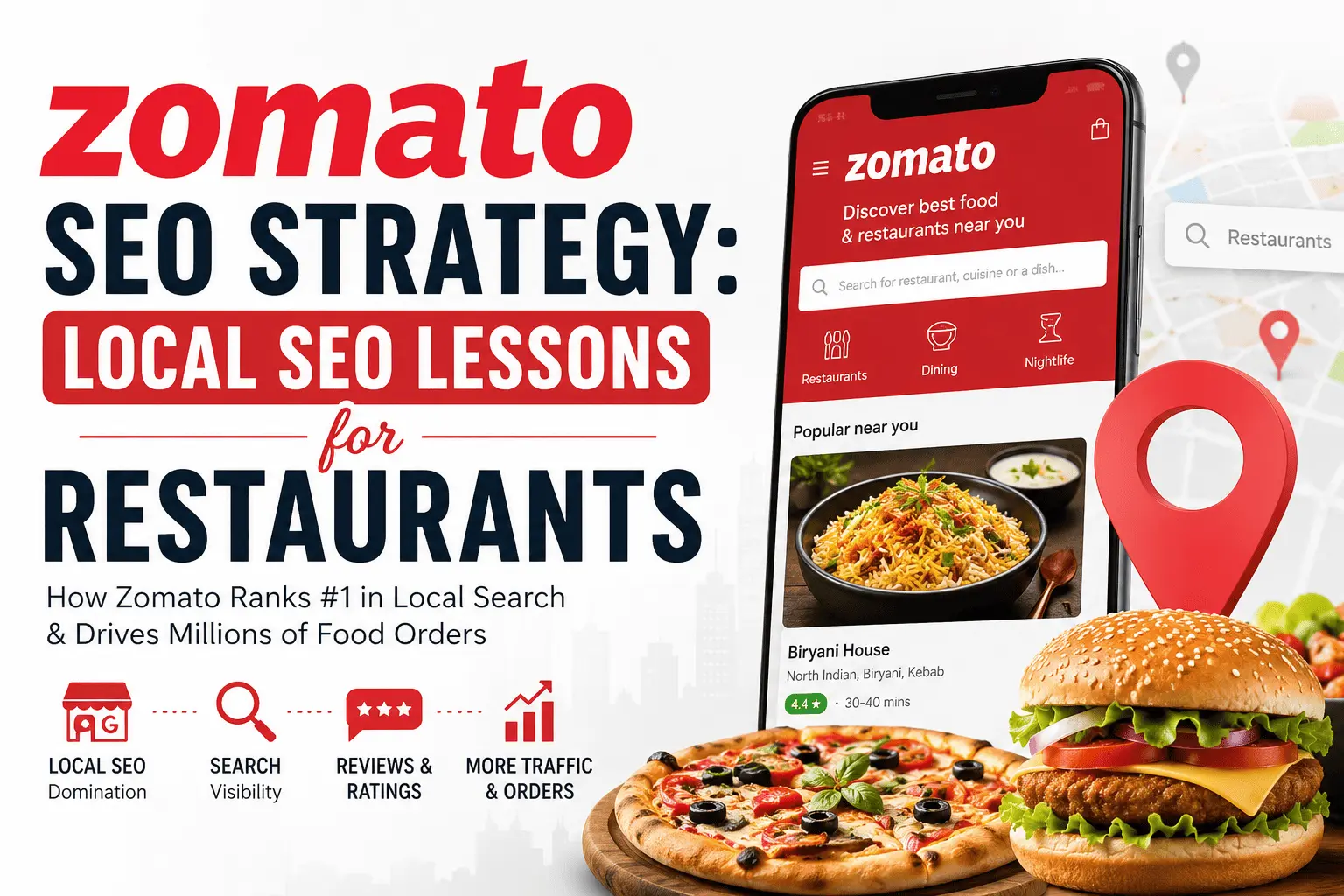
Zomato is one of the strongest examples of how a food brand can use local search intent, restaurant discovery, reviews, menus, city pages, and a mobile-first experience to build a powerful digital presence. The Zomato SEO strategy focuses on capturing high-intent local searches, creating location-specific pages, and optimizing user-generated content to drive consistent organic traffic.
When people search for restaurants, cafes, food delivery, biryani near me, pizza near me, best restaurants in a city, rooftop cafes, family restaurants, nightlife places, or food offers, Zomato often becomes part of the search journey. Its SEO strength does not come from one blog or one landing page. It comes from a large ecosystem of location pages, restaurant pages, cuisine pages, menus, reviews, ratings, collections, offers, and user behavior. Businesses that offer SEO services can learn from this approach by building search intent-driven pages, optimizing local content, and creating a scalable website structure that attracts high-intent organic traffic.
For restaurants, cafes, cloud kitchens, food courts, bakery brands, hotel restaurants, and local food chains, Zomato’s SEO strategy is worth studying. The biggest lesson is simple: food SEO is local, visual, review-driven, and intent-heavy.
A customer searching for food is usually close to taking action. They may want to order now, book a table, compare menus, check ratings, see photos, or find a place nearby. Zomato’s platform is designed around this behavior.
This blog breaks down the SEO strategy of Zomato, how it captures local food searches, and what food businesses can steal from its model.
About Zomato
Zomato is a food delivery and restaurant discovery platform. It helps users find restaurants, explore menus, check reviews, compare ratings, discover offers, and order food online.
Its strength comes from connecting users with restaurants in a highly local way. Food choices depend heavily on location, mood, cuisine, budget, reviews, delivery time, and occasion. Zomato understands this behavior and creates a digital experience around it.
A user may not search only for “restaurant.” They may search for “best biryani near me,” “cafes in Jaipur,” “Chinese food delivery in Mumbai,” “family restaurant in Delhi,” “pizza near me,” or “rooftop restaurant in Bangalore.” These searches are highly specific, and many of them are commercial.
Zomato’s website and app organize restaurants around cities, localities, cuisines, ratings, offers, menus, collections, delivery, dining, and nightlife. This structure helps users discover food options quickly.
From an SEO point of view, Zomato is a great example of local intent mapping. It turns thousands of food-related searches into structured pages that are useful for users and understandable for search engines.
Why Zomato Wins in Local Search
Zomato wins because it understands how people search for food.
Food search is different from many other industries. It is urgent, emotional, local, and visual. A person looking for food usually wants a quick answer. They want to know what is available nearby, how much it costs, how good it is, how fast it can arrive, and whether other people liked it.
Zomato solves these questions through restaurant listings, photos, menus, ratings, reviews, estimated delivery time, offers, and location-based discovery.
Another reason Zomato wins is content scale. Every restaurant page includes menu details, cuisine tags, reviews, photos, pricing, ratings, address, opening times, and delivery options. This creates a huge amount of local content.
But scale alone is not enough. The real strength is structure. Zomato organizes content by city, locality, cuisine, restaurant type, dining mode, collection, and user intent.
This is what businesses should learn. Local SEO is not only about creating one Google Business Profile. It is about building a complete local search presence across pages, reviews, content, and user experience. Following an SEO checklist for small Businesses helps ensure every part of your website and local presence is optimized to improve visibility, attract local customers, and achieve higher rankings in search results.
Zomato’s Keyword Strategy
Zomato’s keyword strategy is built around local and food-specific search intent.
The first keyword group is cuisine-based. These include searches like biryani, pizza, Chinese food, North Indian food, South Indian food, burgers, desserts, coffee, street food, momos, rolls, and bakery items. These searches are powerful because users already know what they want to eat.
The second group is location-based. Examples include restaurants in Jaipur, food delivery in Mumbai, cafes in Delhi, pubs in Bangalore, or the best restaurants in Pune. These keywords connect food discovery with geography.
The third group is “near me” intent. Searches like biryani near me, pizza near me, cafes near me, restaurants near me, and food delivery near me are extremely valuable because they show immediate intent.
The fourth group is occasion-based. These include family restaurants, romantic restaurants, birthday party places, office lunch, late-night food, breakfast places, brunch cafes, rooftop restaurants, and fine dining restaurants.
The fifth group is offer-based. Searches around food coupons, restaurant offers, online food delivery offers, discounts, and deals attract price-sensitive users.
The sixth group is brand-based. Many users search directly for Zomato, Zomato restaurants, Zomato delivery, or Zomato offers. This shows the power of brand demand.
The biggest lesson is that Zomato captures food search from every angle: cuisine, location, urgency, mood, budget, and brand.
What Restaurants Can Steal From Zomato’s Keyword Strategy
Restaurants should stop targeting only their restaurant name and start targeting how customers actually search.
A pizza restaurant should target keywords like pizza near me, best pizza in the city, cheese burst pizza, veg pizza delivery, late-night pizza, and pizza offers.
A cafe should target coffee near me, the best cafe in Jaipur, a work-friendly cafe, a rooftop cafe, a breakfast cafe, and a cafe for couples.
A cloud kitchen should target food delivery keywords by cuisine and location, such as biryani delivery in Malviya Nagar, Chinese food delivery in Andheri, or healthy meals in Gurgaon.
A restaurant website should create pages and content around cuisine, location, occasion, and customer needs.
The goal is to match the hunger moment. When users search for food, your page should appear with the exact answer they need.
Zomato’s City Page Strategy
City pages are one of Zomato’s biggest SEO strengths. The platform creates search experiences around cities and local markets.
A city page can show restaurants, delivery options, dining places, nightlife, offers, collections, local favorites, and popular cuisines. This helps Zomato rank for city-level food searches.
For example, a user searching for restaurants in Bangalore may want to explore cafes, fine dining, pubs, delivery restaurants, trending places, or specific cuisines. A city page gives them multiple paths.
This works because food discovery begins with location. People usually want food in a specific city, area, or neighborhood. Zomato’s structure follows that behavior.
For smaller restaurants and food brands, this shows the importance of location-specific content.
What Businesses Can Steal From Zomato’s SEO Strategy for City Pages
Restaurants with multiple branches should create location pages for each city and locality.
A food chain should not have only one generic “locations” page. It should create pages like a pizza restaurant in Jaipur, a pizza restaurant in Vaishali Nagar, a pizza restaurant in Malviya Nagar, and a pizza delivery in C-Scheme.
Each location page should include branch details, menu highlights, opening hours, delivery areas, photos, reviews, nearby landmarks, FAQs, and ordering options.
A cloud kitchen can create pages for each delivery zone. A cafe chain can create pages for each neighborhood. A bakery can create pages for birthday cakes in different localities.
The key is to make every location page genuinely useful, not copied.
Zomato’s Restaurant Page Strategy
Every restaurant page on Zomato works like a mini landing page. It includes restaurant name, cuisine, location, menu, photos, ratings, reviews, cost for two, opening hours, delivery options, contact details, and offers.
This is powerful because it answers the customer’s main questions quickly.
What food is available?
How much will it cost?
Is the restaurant good?
Where is it located?
Can I order online?
Is it open right now?
What do other customers say?
Are there any offers?
This is exactly what a restaurant website should also answer.
Many restaurant websites look attractive but miss practical information. They may have beautiful photos, but no updated menu, no clear location, no reviews, no delivery information, and no online ordering option. That weakens both SEO and conversion.
What Restaurants Can Steal From Zomato’s Restaurant Page Strategy
Every restaurant should build its own strong restaurant page on its website.
The page should include:
Restaurant name
Cuisine type
Updated menu
Popular dishes
Food photos
Customer reviews
Opening hours
Address and map
Delivery areas
Table booking option
Online ordering option
FAQs
Contact details
A restaurant should not depend only on third-party platforms. Zomato can bring visibility, but the restaurant’s own website should also rank and convert.
The best strategy is to use platforms like Zomato for discovery while building direct search demand through your own website and brand.
Zomato’s Menu SEO Strategy
Menus are a major part of food SEO. Users often search for dishes before they search for restaurants.
Someone may search for butter chicken, paneer tikka, veg thali, sushi, cold coffee, chocolate cake, momos, or chicken biryani. If a restaurant menu is searchable and well-structured, it can capture these intent-based searches.
Zomato benefits from having menus across thousands of restaurants. These menus include dish names, prices, categories, and sometimes descriptions. This creates a large amount of dish-level content.
For restaurants, menu SEO is often ignored. Many restaurants upload menus as images or PDFs only. Search engines may not understand them properly, and users may find it hard to browse on mobile.
A text-based, structured menu is much better for SEO and usability.
What Restaurants Can Steal From Zomato’s Menu Strategy
Restaurants should create searchable menu pages.
Instead of uploading only a menu image, add menu items as text. Organize them by starters, main course, desserts, drinks, combos, breakfast, lunch, dinner, and specials.
Add short descriptions for signature dishes. Include cuisine keywords naturally. Mention vegetarian, vegan, gluten-free, spicy, chef special, bestseller, or healthy options where relevant.
A bakery can create separate pages for birthday cakes, designer cakes, cupcakes, pastries, and wedding cakes.
A cloud kitchen can create separate pages for biryani, rolls, thali, Chinese meals, healthy bowls, and combos.
A searchable menu helps both Google and hungry customers.
Zomato’s Review and Rating Strategy
Reviews are one of Zomato’s biggest trust assets. Food is personal, and users want to know what others experienced before ordering or visiting.
A rating gives a quick signal. Reviews give context. Photos from customers add more confidence. Together, they influence decisions.
A user may choose one restaurant over another because it has better ratings, more reviews, recent feedback, or positive comments about taste, packaging, service, hygiene, or delivery time.
Reviews also add fresh content. Customers naturally use words that future customers search for, such as spicy, fresh, tasty, affordable, hygienic, quick delivery, family-friendly, good ambience, or value for money.
This makes reviews useful for both SEO and conversion.
What Restaurants Can Steal From Zomato’s Review Strategy
Restaurants should actively collect reviews across Google, Zomato, social media, and their own website.
The important part is not only collecting reviews but also using them properly.
Add reviews to the homepage, menu pages, location pages, delivery pages, and table booking pages. Highlight reviews that mention specific dishes, ambience, service, delivery, hygiene, and value.
Restaurants should also reply to reviews. Positive replies build loyalty. Professional replies to negative reviews show that the restaurant cares.
For local SEO, Google reviews are especially important. A restaurant with strong ratings, recent reviews, and active responses can perform better in local discovery.
Zomato’s Photo and Visual Strategy
Food is visual. People often decide what to eat by looking at photos. Zomato understands this and makes food photos a major part of restaurant discovery.
Restaurant photos, dish photos, ambience photos, menu photos, and user-uploaded images all help users decide. A good photo can create cravings. A poor photo can reduce interest.
For food SEO, images also support engagement. Users spend more time on pages with appealing visuals. Photos help them compare dishes, ambience, portions, packaging, and presentation.
Restaurants that ignore photography lose an important part of digital marketing.
What Restaurants Can Steal From Zomato’s Photo Strategy
Restaurants should invest in food photography.
They should have high-quality photos of signature dishes, interiors, seating, packaging, kitchen hygiene, staff, events, and customer moments.
For delivery brands, packaging photos are important. Users want to know if food will arrive clean, fresh, and properly packed.
Photos should also be optimized for the website. Use proper file names, compressed sizes, alt text, and fast loading formats.
For social media, restaurants should turn visuals into reels, stories, menu highlights, behind-the-scenes content, and customer experience posts.
In food marketing, visuals are not extra. They are the product experience.
Zomato’s Collection Strategy
Zomato uses collections to group restaurants by mood, occasion, trend, or theme. Examples may include best cafes, rooftop places, romantic restaurants, luxury dining, trending restaurants, nightlife spots, family restaurants, or must-try food places.
Collections are powerful because people do not always search by cuisine. Sometimes they search by occasion or mood.
A user may not know which restaurant they want, but they know they want a date night place, birthday dinner, brunch cafe, or office lunch option.
This makes collection-style pages very useful for SEO and user experience.
What Businesses Can Steal From Zomato’s Collection Strategy
Restaurants and food businesses can create content around occasions.
A restaurant can create pages or blogs, such as:
Best dishes for family dinner
Best birthday party menu ideas
Best food for office lunch
Romantic dinner experience
Weekend brunch specials
Late-night food delivery menu
Healthy lunch bowls
Festive catering menu
A cafe can create content around work-friendly seating, breakfast dates, coffee meetings, student hangouts, and weekend desserts.
A cloud kitchen can create meal collections for office workers, gym diets, family dinners, party snacks, and late-night cravings.
The goal is to rank for the reason people eat, not only the food item.
Zomato’s Locality SEO Strategy
Zomato does not only target city-level searches. It also benefits from locality-level searches. Food search often happens at a neighborhood level because delivery distance and convenience matter.
A user in Andheri may not care about restaurants in South Mumbai. A user in Malviya Nagar may want food nearby, not across the city.
This is why locality SEO is important. Pages around neighborhoods, delivery zones, and nearby landmarks can capture high-intent users.
Restaurants often miss this opportunity. They only mention the city, but customers search by area.
What Restaurants Can Steal From Zomato’s Locality Strategy
Restaurants should optimize for specific localities.
A restaurant should mention its neighborhood, nearby landmarks, delivery areas, service radius, and local keywords naturally on its website.
For example:
Italian restaurant in C-Scheme
Cafe near Vaishali Nagar
Biryani delivery in Andheri West
Bakery near Gurgaon Sector 56
Family restaurant near the metro station
A multi-location restaurant should have a unique page for every branch. Each page should include local photos, map embed, branch-specific menu availability, reviews, timings, contact number, and delivery details.
Local SEO is won in detail.
Zomato’s Mobile-First Strategy
Food searches are mobile-first. Users often search when they are hungry, traveling, at work, or planning a quick meal. They want fast answers.
Zomato’s app-first and mobile-friendly experience supports this behavior. Users can search, filter, compare, check menus, use offers, track delivery, and reorder easily.
Mobile experience matters because food decisions happen quickly. If a restaurant website loads slowly, has a hard-to-read menu, or makes ordering difficult, users leave.
For restaurants, mobile SEO is not optional. It directly affects orders and bookings.
What Restaurants Can Steal From Zomato’s Mobile Strategy
Restaurants should test their website on mobile.
The menu should be easy to read.
The order button should be visible.
The call button should work.
The location should open in Maps.
The page should load quickly.
Photos should not slow down the site.
Table booking should be simple.
WhatsApp ordering should be easy if used.
A restaurant website should be built for hungry users who want quick action.
Zomato’s Offer and Discount Strategy
Offers play a big role in food discovery. Users often compare restaurants based on discounts, free delivery, combos, coupons, and value deals.
Zomato uses offers to increase visibility and encourage trial. A user may try a new restaurant because of a discount or combo deal.
Offers also create urgency. Food decisions are often impulsive. A limited-time offer can push a user to order sooner.
However, businesses should be careful. Discounts can bring orders, but they should not destroy margins or train customers to buy only during offers.
The real strategy is to use offers smartly for acquisition, retention, and special occasions.
What Restaurants Can Steal From Zomato’s Offer Strategy
Restaurants can create their own direct offers.
Examples include first-order discount, weekday lunch combo, family meal bundle, birthday offer, office lunch package, festival menu, loyalty reward, and free dessert on direct orders.
Restaurants should also promote offers on their website, Google Business Profile, WhatsApp, Instagram, and email list.
Direct offers can help reduce dependency on third-party platforms. If customers order directly, restaurants may save commission and build stronger customer relationships.
Zomato’s User-Generated Content Strategy
Zomato benefits from user-generated content in the form of reviews, ratings, photos, comments, and restaurant feedback.
This content makes the platform feel alive. It also helps users see real experiences instead of only brand-created content.
For food businesses, user-generated content is very valuable. A customer photo of a dish can feel more authentic than a professional shoot. A real review can convince future customers, while content writing helps restaurants create engaging blog posts, menu descriptions, and local landing pages that attract organic traffic. A tagged Instagram story can also create local buzz and strengthen online visibility.
UGC also helps build community. People enjoy sharing food experiences, especially when the food looks good or the ambience is memorable.
What Restaurants Can Steal From Zomato’s UGC Strategy
Restaurants should encourage customers to share content.
Ask customers to tag the restaurant on Instagram. Create a branded hashtag. Repost customer stories. Encourage photo reviews. Add review cards inside the packaging. Offer small incentives for honest feedback where allowed.
Restaurants can also create photo-friendly corners, signature dishes, unique plating, or packaging that people want to share.
The goal is to turn customers into content creators.
Zomato’s Brand Voice Strategy
Zomato is known for a casual, witty, and culturally aware brand voice. Its marketing often connects with food cravings, memes, trends, and everyday Indian behavior.
This matters because food is emotional. People do not talk about food in corporate language. They talk about cravings, moods, plans, cheat days, comfort meals, and favorite dishes.
A strong brand voice helps Zomato stay memorable. It also supports social media engagement and brand recall.
For SEO, brand voice may not directly rank a page, but it improves engagement and recognition. Users remember brands that sound human.
What Businesses Can Steal From Zomato’s Brand Voice Strategy
Restaurants should develop a voice that matches their audience.
A premium restaurant can use elegant and warm language. A youth cafe can use playful captions. A cloud kitchen can use craving-driven copy. A health food brand can use clean, confident, and informative messaging.
The mistake is sounding too generic. Food marketing should feel human, local, and emotionally relevant.
Instead of saying “we offer quality food,” a restaurant can say “fresh North Indian meals made for family dinners, office lunches, and weekend cravings.”
Specific language works better.
Zomato’s Full-Funnel Food Marketing Strategy
Zomato’s strategy is not only SEO. It combines search, app engagement, social media, offers, notifications, restaurant partnerships, reviews, paid placements, and brand campaigns.
This is why it stays visible across the food journey.
A user may discover a restaurant on Google, compare it on Zomato, see it on Instagram, receive an app offer, read reviews, and finally order.
This shows that restaurant marketing should not depend on one channel.
SEO brings discovery. Google Business Profile brings local visibility. Zomato brings marketplace visibility. Instagram builds cravings. WhatsApp improves repeat orders. Paid ads bring immediate traffic. Reviews build trust.
The best restaurant marketing system connects all of these.
What Restaurants Can Steal From Zomato’s Full-Funnel Strategy
Restaurants should build a connected digital presence.
They should optimize their website, Google Business Profile, Zomato profile, Instagram page, menu pages, review strategy, and direct ordering system.
They should also run campaigns around special dishes, festivals, offers, events, and customer stories.
A restaurant that appears everywhere the customer searches has a better chance of getting orders.
The goal is simple: be visible before hunger becomes someone else’s sale.
How Restaurants Can Apply Zomato’s SEO Strategy
A restaurant can apply Zomato’s strategy by building a strong local content structure.
Start with a homepage that explains cuisine, location, atmosphere, and ordering options. Then create menu pages that are searchable and mobile-friendly. Add location pages for every branch. Create pages around popular dishes and occasions.
For example, a North Indian restaurant can create pages for butter chicken, paneer tikka, thali, family dinner, office lunch, catering, and party orders.
Add reviews, photos, FAQs, offers, and online ordering options to each important page.
Also, optimize Google Business Profile with photos, menu, opening hours, posts, reviews, and accurate contact details.
This creates a complete restaurant SEO system.
How Cloud Kitchens Can Apply Zomato’s SEO Strategy
Cloud kitchens depend heavily on delivery visibility. They should create pages around cuisine, delivery area, popular dishes, combos, and meal occasions.
A cloud kitchen can target keywords like healthy lunch delivery, biryani delivery near me, office meal box, late-night food delivery, family dinner combo, and budget meals.
The website should show menu, delivery zones, packaging quality, hygiene standards, reviews, offers, and direct ordering options.
Cloud kitchens should also create social proof through customer photos, delivery reviews, and repeat-order campaigns.
Since cloud kitchens do not have a dine-in ambience, trust must come from food quality, packaging, reviews, and consistency.
Common Mistakes Restaurants Should Avoid
The first mistake is not having a website. Depending only on Zomato, Swiggy, or Instagram limits control.
The second mistake is uploading menus only as images or PDFs. Menus should be text-based and searchable.
The third mistake is ignoring Google Business Profile. Local restaurant searches depend heavily on map visibility.
The fourth mistake is not collecting reviews. Reviews influence both rankings and customer decisions.
The fifth mistake is using poor food photos. Bad visuals reduce cravings.
The sixth mistake is creating copied location pages. Every branch page should be unique.
The seventh mistake is hiding ordering options. Users should easily call, book, order, or message.
The eighth mistake is not promoting direct orders. Restaurants should build their own customer base instead of depending only on platforms.
Final Takeaway
Zomato’s SEO strategy works because it is built around local food intent. The platform understands that users search by location, cuisine, mood, budget, ratings, offers, and urgency.
Its biggest strengths include city pages, locality pages, restaurant pages, searchable menus, reviews, ratings, photos, collections, mobile experience, offers, and brand voice.
Restaurants can steal this strategy by improving their own digital presence. They should create searchable menu pages, optimize local keywords, build branch pages, collect reviews, use strong food photos, create occasion-based content, and make ordering easy.
Cloud kitchens can use the same model by targeting delivery areas, cuisine-specific keywords, meal occasions, and direct ordering searches.
The biggest lesson is simple: restaurant SEO is not only about ranking for the restaurant name. It is about appearing when people are hungry, nearby, interested, and ready to order.
A food business that understands this can build stronger visibility, more trust, and more direct sales.
FAQs
1. What is Zomato’s SEO strategy?
Zomato’s SEO strategy is based on local search intent, restaurant pages, city pages, locality pages, cuisine keywords, reviews, ratings, menus, photos, offers, and mobile-first discovery. It ranks well because it matches how users search for food and restaurants.
2. Why does Zomato rank well for restaurant searches?
Zomato ranks well because it has a large amount of restaurant data, user reviews, menu content, city-level pages, locality pages, and cuisine-based listings. Its structure helps search engines understand food-related local intent.
3. What can restaurants learn from Zomato’s SEO strategy?
Restaurants can learn to create searchable menus, optimize location pages, collect reviews, use high-quality food photos, target cuisine keywords, improve mobile experience, and make ordering or booking easy.
4. Why are reviews important for restaurant SEO?
Reviews build trust and help users decide where to eat or order from. They also add fresh content with natural customer language around food quality, service, ambience, delivery, and value.
5. How can a restaurant improve local SEO like Zomato?
A restaurant can improve local SEO by optimizing its Google Business Profile, creating location pages, adding menu content, collecting reviews, using local keywords, uploading food photos, and keeping contact details updated.
6. Should restaurants have their own website if they are already on Zomato?
Yes. Zomato can bring discovery, but a restaurant’s own website gives more control over branding, direct orders, SEO, customer data, offers, and long-term visibility.
7. What type of keywords should restaurants target?
Restaurants should target cuisine keywords, dish keywords, locality keywords, near-me keywords, occasion keywords, and offer-based keywords. Examples include pizza near me, family restaurant in Jaipur, biryani delivery in Andheri, and rooftop cafe in Delhi.
8. Why is menu SEO important for restaurants?
Menu SEO is important because users often search for specific dishes. A text-based, searchable menu can help restaurants rank for dish-level and cuisine-level searches, while also improving user experience.
9. How can cloud kitchens steal Zomato’s strategy?
Cloud kitchens can target delivery-area keywords, cuisine pages, popular dish pages, meal combo pages, reviews, packaging photos, hygiene content, and direct ordering options.
10. What is the biggest SEO lesson from Zomato?
The biggest lesson from Zomato is that local intent drives food decisions. Restaurants should optimize for what users search when they are hungry, nearby, and ready to order.